Jigsolitaire
- 4.6
- Rating
- 10.00M
- Installs
- Free
- Price
 Analysis by App-foxy
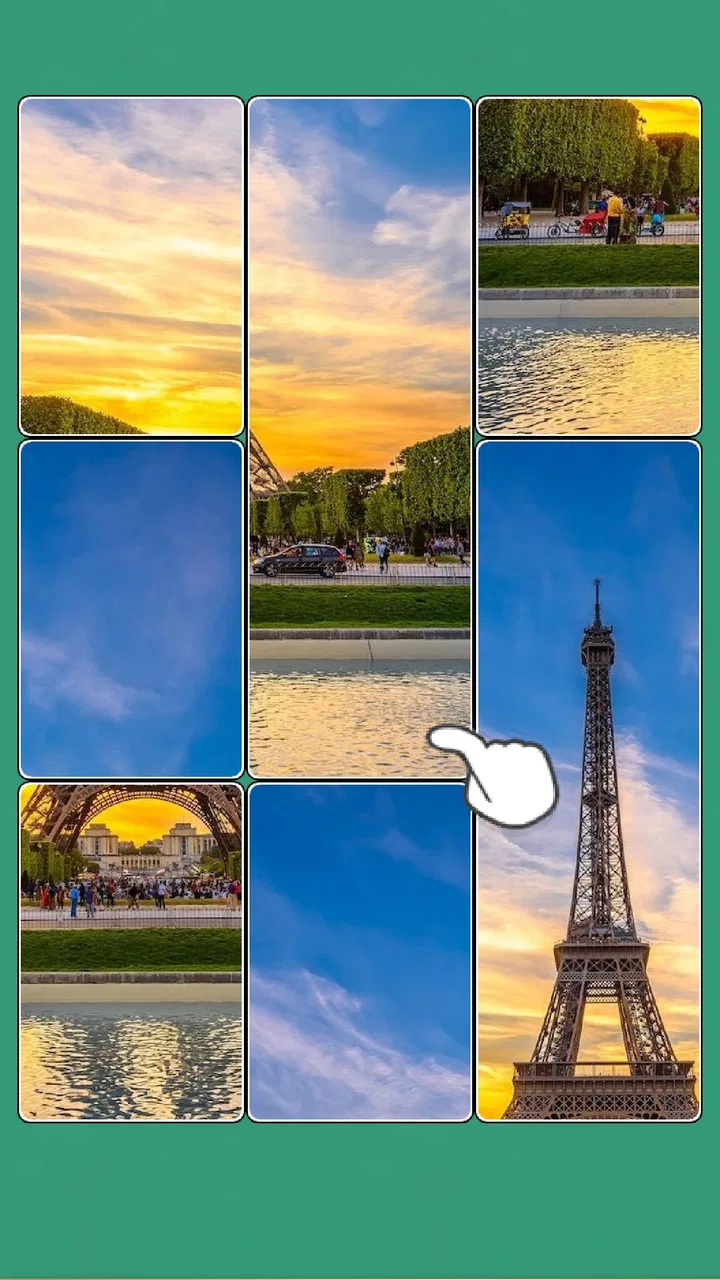
I approached Jigsolitaire expecting a light puzzle to fill a few spare minutes, but its central idea gives it a more distinctive rhythm than a standard jigsaw or a traditional solitaire game. It combines the familiar satisfaction of fitting picture pieces with the steady decision-making of card play, creating a game that asks me to switch between visual recognition and careful planning. That combination is the reason I kept returning to it rather than treating it as a one-time distraction.
Developed by Gamincat, this free puzzle game is aimed at a broad audience and carries an Everyone age rating. Its store summary describes the experience as “Jigsaw & Solitaire Fun,” while the short description reduces it to “Jigsolitaire.” Those phrases are brief, but they point to the important capability: the game turns two recognizable casual formats into one shared activity instead of presenting them as unrelated modes.
That distinction matters in everyday use. A conventional jigsaw is usually about patiently building an image, while solitaire is about managing available moves. Here, I get some of both. The picture gives me a visual goal, but the card-like structure changes how I reach it. I am not simply searching for a matching edge; I am also thinking about order, timing, and whether a tempting move will make the next part harder.
You May Also Like

 Blood Strike: 2.5 Anniversary
Blood Strike’s Loadouts Turn Every Drop Into a Tactical Gamble
A close look at Blood Strike’s custom loadouts: how fast access to signature weapons reshapes its battle royale rhythm, rewards preparation, and narrows the gap between fights.

 Pandora - Music & Podcasts
Pandora’s Music Is Easy to Start, but Harder to Recover
Pandora’s strength is its low-effort path from a seed to a station. Its weak spot is how much confidence it asks you to place in connection, setup, and quiet recovery.

 8 Ball Pool
 Is Built on Rivalries, Rematches, and Routine
A close look at the rivalries, rematches, shared routines, and unanswered safety questions that turn a quick pool match into a persistent mobile community.

 Samsung Music
’s Quiet Strength Is Playing What You Already Own
Its reach comes less from spectacle than from dependable access to a personal library. That simplicity is both the app’s strongest retention engine and its ceiling.

 AccuWeather: Weather Radar
AccuWeather Review: A Quick, Clear Forecast for Everyday Decisions
For everyday plans, the best forecast is the one you can understand quickly. AccuWeather makes rain timing, radar, and local conditions easy to act on, with a few trade-offs.

 Hill Climb Racing
Why Hill Climb Racing Still Turns Crashes Into One More Run
A tiny car, a bumpy hill and one more upgrade: Hill Climb Racing keeps resurfacing because its simple chaos makes every near-miss feel personal.
More From Our News Desk



Why the jigsaw-and-solitaire combination works
The strongest part of the design is the way the two puzzle languages support each other. Jigsaw play rewards observation: I look at colors, shapes, lines, and the overall composition. Solitaire rewards restraint: I consider which move opens the most useful possibility and which move may leave me stuck. When these habits meet, the game feels more active than a quiet picture puzzle but less demanding than a strategy game built around complex rules.
In my experience, the appeal comes from the changing pace. Some moments are almost automatic because a piece or card clearly belongs in the available position. Other moments slow me down, especially when several choices look reasonable. That variation prevents the session from becoming a repetitive matching exercise. I can play quickly when I want a mental break, then pause and examine the board when the arrangement requires more attention.
This is also why the game works well for people who do not normally choose one of these genres. Someone who finds ordinary solitaire too abstract may appreciate having an image to anchor the decisions. Someone who finds a traditional jigsaw too slow may enjoy the additional structure created by the solitaire element. The result is not simply “two games in one” as a slogan; it is a different way of organizing familiar puzzle actions.
The key strength is the change in attention between seeing and planning. I am constantly moving from a broad view of the image to a narrow look at the next possible action. That mental shift gives short sessions a sense of progress, even when I am not trying to complete a long, relaxing puzzle.
What a typical session feels like
I usually begin by scanning the available pieces rather than making the first move that catches my eye. The visual information is important, but I have found that the best opening is not always the most obvious match. A move that seems satisfying immediately can remove a useful option, while a less exciting move may reveal a better route through the arrangement.
That creates a simple but meaningful habit: I check what the move will expose before committing to it. This is one of the less obvious lessons of the game. The puzzle is not only asking, “Where does this belong?” It is also asking, “What will become possible after I place it?” Thinking one step ahead is enough to improve the experience without turning it into a heavy calculation exercise.
As the board develops, I tend to separate certainty from possibility. If a piece has a clear visual relationship with the target, I treat it as a safe move. If several locations seem plausible, I delay that decision and work elsewhere. This approach reduces unnecessary backtracking and makes the final stages feel earned rather than lucky.
The card influence is especially noticeable when the board becomes less obvious. I cannot rely only on color or shape; I need to manage the order in which choices become available. That is where the game differs from simply dragging pieces into a picture. The puzzle encourages me to preserve flexibility, which is a useful strategy for short sessions because it gives me something to think about even when the visual material is familiar.
How I use it during ordinary breaks
A realistic use case for me is a short pause between tasks. I can open the game when I have enough time for a small mental reset but do not want to start a story-driven game or a long competitive match. The visual nature of the puzzle helps me shift focus away from whatever I was doing, while the solitaire structure gives the break a clear objective.
I also find it suitable for winding down because the challenge is easy to understand from the beginning. There is no need to learn a large collection of controls or remember a complicated fictional setting. I can concentrate on the current arrangement, make a few decisions, and stop when the session feels complete. That makes it more practical than games that depend on uninterrupted attention for a long period.
For families, the Everyone rating makes the game broadly approachable, but I would still describe it as better for shared problem-solving than for very young children who need extremely simple touch interactions. The combined format may require a little patience at first. An older child, teenager, or adult can understand the visual goal and gradually pick up the value of planning before moving.
It can also work as a low-pressure alternative to a standard brain-training routine. I would not treat it as a formal learning tool, but it does encourage visual comparison, sequencing, and cautious decision-making. The useful part is that these skills appear through play rather than through a series of exercises that feel like tests.
Small habits that make the puzzle easier
My first practical tip is to avoid clearing the most convenient option automatically. Before making an easy placement, I look at the remaining choices and ask whether that move blocks a route or leaves a more useful piece inaccessible. This takes only a moment, but it changes the game from reactive matching into deliberate play.
My second tip is to work from strong visual anchors. Distinctive colors, clear lines, and recognizable sections of the image are more reliable than vague background areas. Once an anchor is established, I use it to narrow the surrounding possibilities. This is particularly helpful when several pieces share a similar tone and the shape alone is not enough to decide.
A third useful approach is to leave uncertain pieces alone until the board gives more information. I used to spend too much time forcing a questionable match because I wanted immediate progress. In this game, patience is often more efficient. A later move can reveal the relationship that was unclear at the start, allowing me to solve the difficult section with less guesswork.
Finally, I try to keep the endgame in mind. The last available choices can be more restrictive than the opening ones, so I do not spend every flexible option early. Preserving a few alternatives gives me room to recover when the remaining arrangement does not look as expected. That is a small but important trade-off: fast progress is not always the same as good progress.
Where it differs from ordinary puzzle alternatives
Compared with a normal jigsaw game, Jigsolitaire feels less purely meditative. A traditional jigsaw lets me focus almost entirely on the image and the physical satisfaction of assembling it. Here, I have another layer to consider, so the experience is more interactive and sometimes more demanding. If I want a completely calm activity with no meaningful risk in my choices, a conventional jigsaw may suit me better.
Compared with standard solitaire, this game is more visual and less dependent on memorizing card relationships. The image gives context to the actions, which can make the puzzle feel more inviting. On the other hand, players who enjoy the precise rules and familiar structure of classic solitaire may find this hybrid less predictable or less focused on card mastery.
It also differs from match-three puzzles. Match-three games usually emphasize quick reactions, chains, and immediate feedback. Jigsolitaire rewards looking ahead instead. I am less concerned with speed and more concerned with preserving useful options. That makes it a better choice when I want a thoughtful pause, but not when I am looking for energetic action or constant visual effects.
Another comparison is with large-scale logic puzzles. Those games can provide deeper deduction and more demanding long-term challenges, while this one is easier to pick up without preparation. The trade-off is depth. I would choose a dedicated logic title when I want a problem that occupies my full attention for a long time. I choose this game when I want a compact puzzle with a gentler learning curve.
The friction points worth knowing
The hybrid format is not automatically perfect for everyone. Players who prefer a single, clearly defined puzzle system may feel that the combination sits between genres. It does not offer the pure image-building focus of a jigsaw, nor does it reproduce the exact satisfaction of a classic solitaire table. Its identity comes from the blend, so the blend has to appeal to you.
There is also a risk of hesitation. Because the game rewards considering future options, I sometimes spend longer than expected examining a move that should be simple. That is enjoyable when I am in the mood for thought, but it can feel like friction when I only want to tap through a quick series of obvious actions.
The visual approach may not suit players who prefer text-heavy or number-based puzzles. Much of the decision-making depends on seeing relationships in the picture and recognizing useful placements. If visual matching is tiring or if you prefer explicit clues, a word puzzle, number grid, or classic card game may be a better fit.
Another limitation is that the experience is best understood as casual puzzle play rather than a deep strategic system. I would not install it expecting a competitive card ladder, a long narrative campaign, or the complexity of a specialist solitaire collection. Its value is in the compact combination and the way it makes a familiar break feel slightly more engaging.
Device fit, access, and expectations
The game is free, which makes it easy to try without committing money first. It runs on Android devices using version 7.0 or later, so compatibility should be comfortable for many older phones as well as newer ones. The current version is 1.0.2, and I would approach it as a focused puzzle experience rather than a broad platform with many unrelated systems.
Its audience is already substantial: the game has passed ten million installs, holds an average rating of 4.6 from around 262 thousand ratings, and has about 1.8 thousand written reviews. Those figures suggest that the basic concept connects with a large number of casual players, though popularity alone does not guarantee that the hybrid format will match your taste.
For someone deciding whether to keep it installed, I would use a simple test. If you enjoy picture puzzles but want more decision-making, it is worth trying. If you enjoy solitaire but want a more visual and less traditional presentation, it is also a sensible choice. If you dislike pausing to plan or prefer fast reactions, the game may feel slower than expected even though the rules are approachable.
Who gets the most from this particular design
I think the best audience is people who want a puzzle that can change intensity without changing its basic identity. You can make quick, confident placements when the board is clear, or slow down and protect your options when the arrangement becomes uncertain. That flexibility is more useful than it first appears because it lets the same game fit different kinds of breaks.
It is especially suitable for players moving between genres. A jigsaw fan can find extra structure here, while a solitaire fan can gain a stronger visual goal. It may also appeal to someone returning to mobile games after a long break because the basic actions are familiar and the challenge grows from the arrangement rather than from a complicated control scheme.
I would skip it if my main priority were competitive pressure, a story, elaborate progression, or a highly specialized form of solitaire. I would also choose a pure jigsaw when I wanted a slower, more contemplative picture-building session. Jigsolitaire is at its best when I want the middle ground: enough planning to keep my mind engaged, enough visual progress to make the session feel rewarding, and enough simplicity to start playing immediately.
After spending time with it, my recommendation is straightforward. Gamincat has made a focused puzzle game whose real appeal is not either ingredient alone, but the way jigsaw observation and solitaire planning alter each other. The experience is free, accessible to an Everyone audience, and easy to fit into ordinary breaks, while still offering small strategic choices that reward patience. If you want a casual puzzle that asks you to look carefully before you move, this is a genuinely enjoyable option.
The final decision depends on the kind of satisfaction you want. Choose a traditional alternative for purity, speed, or deeper specialization. Choose this one when you like the idea of building toward a picture while managing the order of your decisions. For me, that balance gives the game a clear purpose: it turns a familiar visual puzzle into a more thoughtful short-session activity without making it intimidating.
FAQs for Jigsolitaire
01What is Jigsolitaire and how does it work?
Jigsolitaire is a unique app that combines the classic games of jigsaw puzzles and solitaire. Players solve jigsaw puzzles to unlock solitaire games, providing a fresh twist on both genres. The app offers various difficulty levels and themes, ensuring that players of all ages can enjoy the experience.
02Is Jigsolitaire free to download and play?
Jigsolitaire is free to download and offers a variety of puzzles and solitaire games at no cost. However, the app may include in-app purchases that allow users to access premium features, remove ads, or obtain additional puzzle packs for a more enhanced gaming experience.
03What are the main features of Jigsolitaire?
Jigsolitaire boasts a range of features, including multiple puzzle sizes, different solitaire game modes, and customizable backgrounds. It also offers daily challenges, leaderboards, and the ability to save your progress. The app’s intuitive interface and vibrant graphics aim to provide an engaging and enjoyable user experience.
04Does Jigsolitaire require an internet connection?
Jigsolitaire can be played offline, making it perfect for on-the-go entertainment without the need for a constant internet connection. However, certain features, such as leaderboards and daily challenges, may require internet access to update scores and content.
05What devices are compatible with Jigsolitaire?
Jigsolitaire is compatible with both Android and iOS devices. Users should ensure their device meets the minimum system requirements for optimal performance. Regular updates are provided to enhance compatibility and introduce new features, ensuring a smooth experience across different devices.
Pros
- Engaging puzzle mechanics enhance cognitive skills.
- Intuitive controls make gameplay seamless.
- Visually appealing graphics and themes.
- Regular updates with new levels and challenges.
- Offline play available for uninterrupted fun.
Cons
- In-app purchases can be pricey.
- Ads may interrupt gameplay frequently.
- Limited free levels available initially.
- Some puzzles may feel repetitive.
- Requires significant storage space.

Jigsolitaire
Gallery